


Leave the world better than you found it.

Naveen Varghese — Montreal, QC

I turn complex business problems into measurable opportunities. Today that means pricing and lifecycle economics on aircraft engines. Before that: a turnaround, a consulting bureau, a defence market model, and a startup that taught me more by failing.

  • Strategy
  • Finance
  • Commercial
  • Analytics
  • AI

01 — The short version

I like problems where the answer isn't obvious, the data is messy, and the decision actually matters.

I'm a strategy and finance professional working at the point where commercial decisions meet their numbers. My job, stated plainly, is to figure out where a business is leaving value on the table — and then to build the case, precise enough to sign, for going and getting it.

I started in engineering, then in sales, which is where you learn that businesses don't run on strategy decks; they run on someone deciding to pay. I moved into building one, then fixing one, then advising several, then modelling them. Each step added a layer rather than replacing the last. The commercial instinct still tells me which question is worth asking. The financial modelling tells me whether the answer is worth acting on. And the engineering is why I keep reaching for the tool that makes the analysis run itself.

Today I do that inside aerospace, on engines that fly for decades and earn most of their economics late in life. It's a good place to work if you like problems with long horizons, real constraints, and consequences you can measure.

  • Understand
  • Structure
  • Analyse
  • Challenge
  • Decide
  • Execute
  • Measure
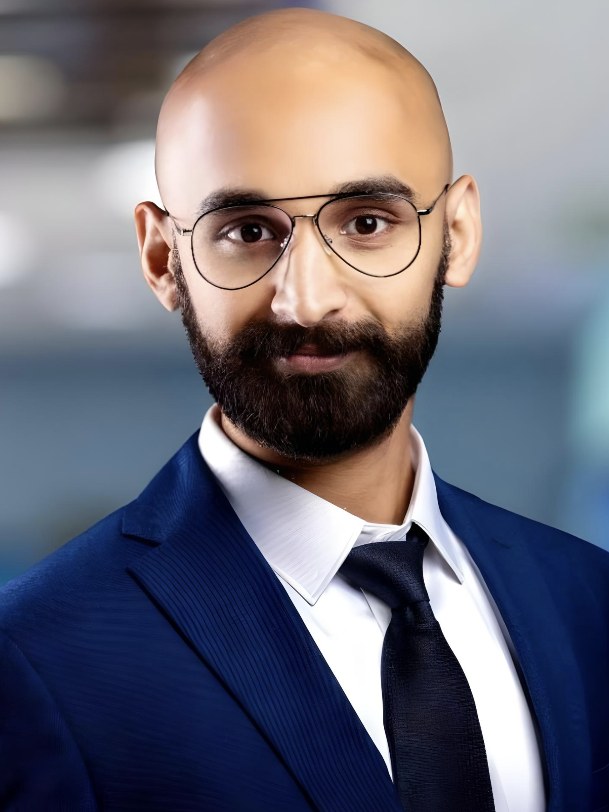
Portrait of Naveen Varghese
Naveen VargheseMontreal

02 — By the numbers

Evidence, with the context attached.

  • 1,152% Doha Computer Centre Monthly revenue growth after repositioning a Qatari IT retailer from consumer walk-ins to enterprise and government buyers. A $10K monthly loss became a $30K monthly profit in nine months.
  • $X0M Aerospace aftermarket Annual impact from a lifecycle review of aftermarket commercial offerings on a mature engine programme. The ten-year model runs several times larger.
  • 50yr Modelling horizon Multi-decade financial models built to support partner negotiations behind contracts measured in billions.
  • $X00K Bombardier Defence One-time saving from replacing a commissioned market study with a self-updating Power BI model running on live fleet data.
  • 1of 3 Regulated market entry Licences awarded from eighteen applicants, in a jurisdiction that had not yet written the regulations we were applying under.
  • 5+ Consulting mandates External strategy engagements led to board-level recommendation — go-to-market, product launch, regulated entry — while completing an MBA.

Where a figure is commercially sensitive I mask a digit rather than invent one: $X0M is a number in the tens of millions, $X00K in the hundreds of thousands. Everything here is drawn from work I did and can talk through.

03 — The journey

Eight chapters. Each one added something the last one couldn't.

  1. 2014 — Jun 2018Kerala, India

    University of CalicutB.Tech, Mechanical Engineering

    Robowars Team Lead · Entrepreneurship Development Club, Co-Founder

    Four years of mechanical engineering, and the parts that taught me most happened outside the syllabus. I led the robowars team — designing and building combat robots that had to survive an arena, on a student budget, against other teams doing exactly the same thing. It's an unusually honest form of engineering. Your design either holds when something hits it or it doesn't, and no amount of explaining changes the result.

    I also co-founded the Entrepreneurship Development Club, which in hindsight was the first strategy work I ever did: taking twelve members' rough ideas and helping structure them into applications strong enough to win government funding.

    Robowars — two things enter, the arena decides

    • Top 5%First Class with Honors; GPA 8.11 / 10
    • 1 of 20MOMA Scholarship, from 800 students
    • Team leadRobowars — design, build, compete
    • $85KGovernment grants secured by 12 club members
    • Mechanical design
    • Team leadership
    • Entrepreneurship
    • Build & test
  2. 2019 — 2020India

    BYJU'SEdTech · direct and inside sales

    Business Development Associate

    My first job, and the one where I was bad at my job for the longest. Six weeks in, most of my peers were well past three hundred thousand in revenue and I was under a hundred. I was following the playbook precisely, and it wasn't working.

    What changed it was asking for help. I brought an experienced colleague along to a demonstration and watched him run it, and the gap became obvious: I had been explaining a product when I should have been understanding a household. We closed a high-value deal in that session. After that the numbers came — and later I was able to pass the same shortcuts to a teammate on a performance plan. He made manager eight months after I left.

    I also moved from direct field sales into inside sales, which is a genuinely different craft. You lose the room, the body language and the kitchen table, and you have to build the same trust down a phone line.

    • ~$110KRevenue closed
    • Direct → InsideWorked both sales models
    • Full cycleCold call, demo, spot close
    • PIP → ManagerTeammate I coached, promoted 8 months later
    • B2C sales
    • Product demonstration
    • Sales cycle
    • Mentoring
  3. Dec 2020 — Feb 2022Thrissur, India

    SupermaaFood delivery & cloud kitchen · seed-funded venture

    CEO & Co-Founder

    I co-founded a cloud kitchen around two things that shouldn't be in tension: employment for women and food people could actually eat. Fourteen cooks — we called them supermoms — a fifteen-person team, twelve products, on ten thousand dollars raised from friends and family.

    It was as much a technology business as a food one, and I owned that side. We built the mobile app and the web storefront from nothing, ran the ordering flow, the catalogue and the social channels, and used what the data told us to decide what to cook next. One campaign was reshared by the state's Chief Minister and pulled in over fifteen thousand organic interactions.

    We chose the hardest category deliberately. The logic was that if we could solve quality control in food, every other home-made category would be easy afterwards. That reasoning was backwards. Food has almost no shelf life, home cooking varies day to day with volume, and a cancelled order is simply a loss. The thing that closed us was the thing we'd assumed we would solve along the way.

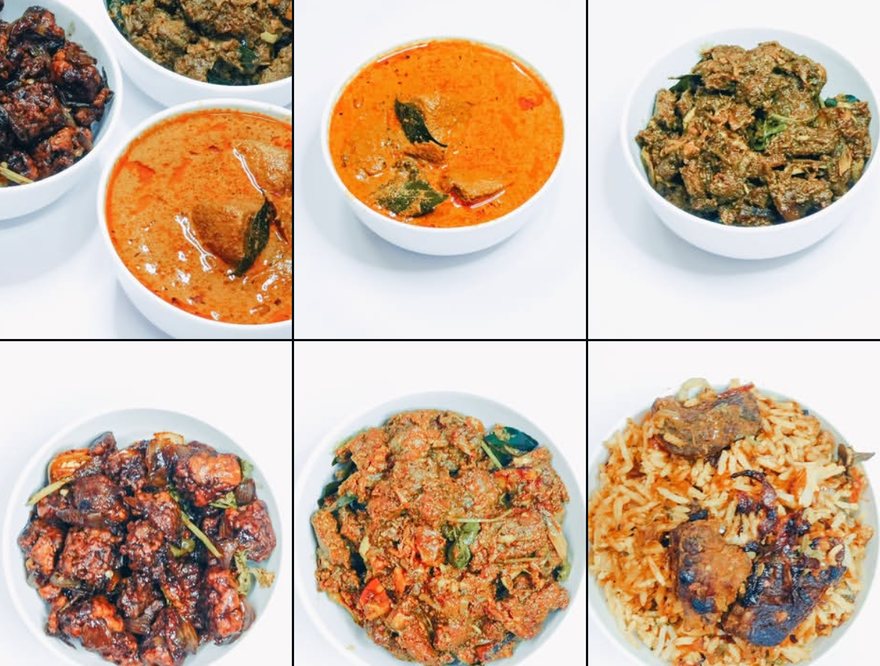
    The Supermaa brand mark The Supermaa storefront showing prepared dishes from the product catalogue
    Supermaa — the brand, and the catalogue we shipped
    • $10KSeed capital raised, friends & family
    • 15People led; 14 cooks, 12 products
    • App + webPlatform built and run in-house
    • 15K+Organic interactions; campaign reshared by the state Chief Minister
    • Venture building
    • Platform build
    • Go-to-market
    • Operations
  4. Oct 2021 — Dec 2022Doha, Qatar

    Doha Computer Centre$3M IT retailer · several consecutive loss-making years

    Head of Sales & Strategy

    Years of losses and a management team seriously discussing closure. Before running a single sales session, I sat with the sales team and asked them why they thought we were losing money. They already knew. Nobody had asked them.

    The answer was the customer. We were selling one laptop at a time to walk-in consumers in a market where enterprises and government departments bought the same products in volume, at better margin, on repeat cycles. I repositioned the business toward B2B and B2G and rebuilt the sales process, client engagement model, CRM, website and supplier terms around that decision.

    Then a second opportunity surfaced. Server demand was climbing ahead of the World Cup and the margins were far better than anything we carried — but we had no technical capability and no spare capacity to build it. I taught myself server hardware on YouTube, started quoting RFQs myself, closed a deal with advance payment, and brought in freelance technicians to install.

    • 1,152%Monthly revenue growth
    • $10K → $30KMonthly loss to monthly profit, in 9 months
    • 95%Month-over-month client retention
    • 24%Margin on the server line I built from scratch
    • Turnaround
    • B2B / B2G
    • Sales strategy
    • Supplier negotiation
  5. 2022 — Sept 2024Montreal, QC

    John Molson School of BusinessConcordia University · MBA, Business Strategy

    MBA Candidate · Teaching Assistant

    I had been running businesses on pattern recognition and nerve. The MBA gave me the machinery — discounted cash flow, market sizing, structured problem solving — and, more usefully, made me defend my reasoning in front of people who were better at it than I was.

    I won two case competitions, which is the closest thing school offers to the real job: a messy brief, a hard deadline, and a panel who will find the weak assumption if you leave one in. I finished near the top of the cohort and taught three of the courses back as a teaching assistant — marketing, entrepreneurship and data analytics. Explaining regression to twenty people who haven't seen it before is its own kind of stress test.

    • 4.02 / 4.30GPA — top 3% of cohort
    • 2 ×Case competition wins
    • ScholarshipCopland Family Scholarship, awarded for entrepreneurial mindset
    • 3Courses taught as TA; Beta Gamma Sigma, Dean's List
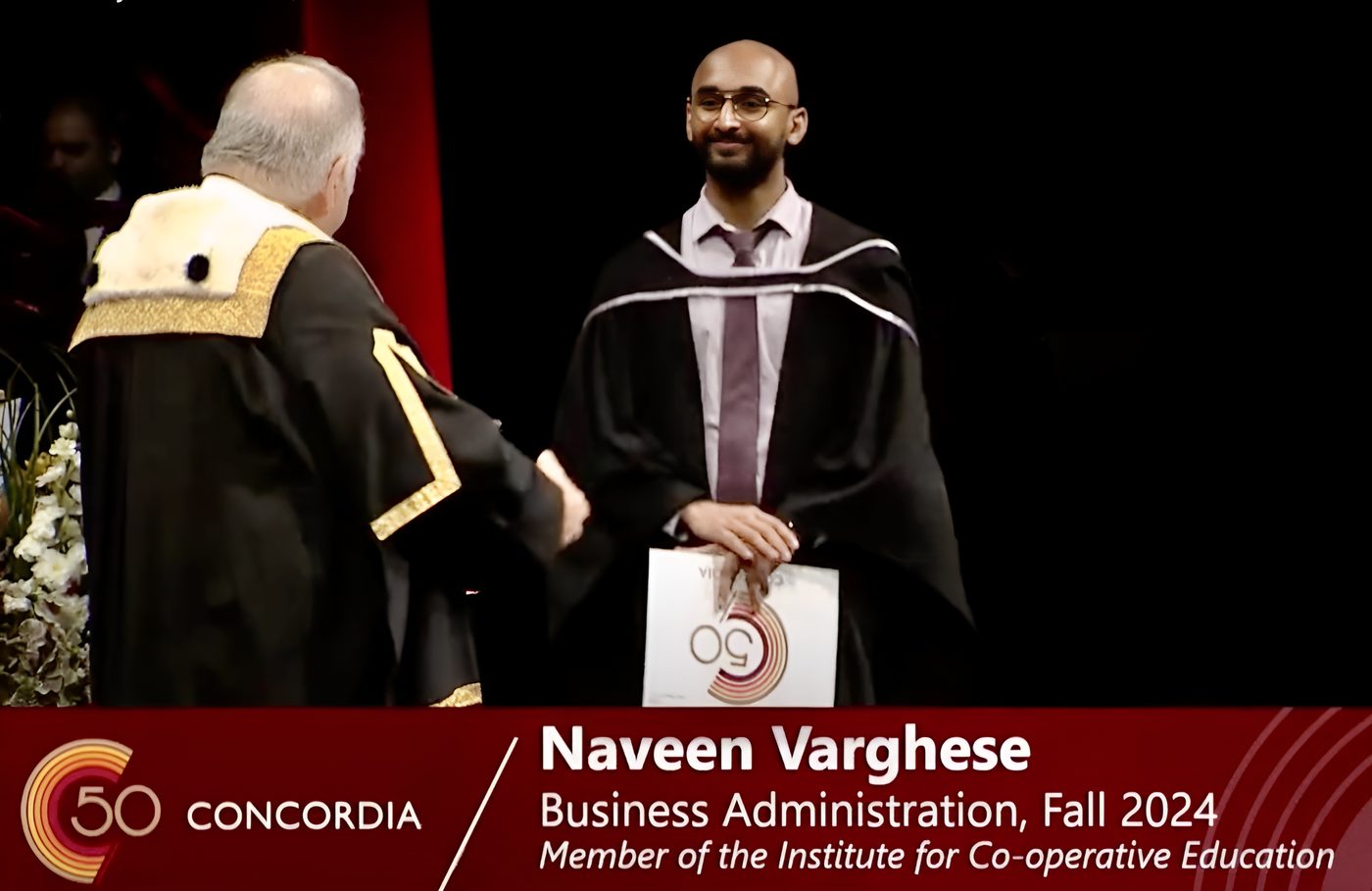
    Naveen Varghese being hooded at Concordia University convocation
    Convocation — Concordia University, Fall 2024
    • Business strategy
    • Financial modelling
    • Data analytics
    • Case competition
  6. Apr 2023 — Aug 2024Montreal, QC

    Small Business Consulting BureauConcordia University's consulting arm · external client mandates

    Management Consultant

    Five-plus external mandates in fifteen months, run alongside the MBA and a full-time analyst role. Go-to-market, product launch, regulated market entry — real clients, real boards, decisions that happened afterwards.

    The mandate that taught me most was a cannabis dispensary licence in a jurisdiction that hadn't finished writing its cannabis regulations. Nobody on the team wanted to lead it, because there was nothing to research. I took it, and made a habit of calling the authorities who were actively drafting the rules whenever we hit a grey area. It gave us direction; more than once it showed them a gap they hadn't accounted for.

    The other lesson came from a $25M European garment steamer manufacturer entering North America. The data said the consumer market was crowded. The useful answer was somewhere else entirely.

    • 5+Mandates led to board-level recommendation
    • 1 of 3Licences won, from 18 applicants
    • $2MProjected incremental revenue, +14% topline
    • $800KRevenue from five EdTech strategies for a Montreal school
    • Market entry
    • NPV / IRR / ROE
    • Competitive analysis
    • Client delivery
  7. Sept 2023 — Sept 2024Montreal, QC

    BombardierBusiness jet manufacturer · Defence and Aftermarket

    Strategy & Business Development Analyst

    The Defence business held a market analysis commissioned from a top-tier consulting firm. It was rigorous, and it was already going stale, because it was a document. Refreshing it meant commissioning it again.

    I rebuilt the logic as a live Power BI model running on Cirium fleet data, so the opportunity set recomputed itself as the fleet moved. The part I'm proudest of wasn't the dashboard: it was a method for estimating aircraft retirement age by country, which turned a snapshot of what exists into a forward view of who has to replace what, and when. That's where the untapped opportunities were sitting. I presented it to the Director of Defence Programs.

    I worked on the Aftermarket side of the business as well, hosting the daily S&OP meetings across operations — aligning teams who each held a different, entirely reasonable view of the same week. That's where I learned that alignment is a harder problem than analysis.

    • $X00KOne-time saving from retiring a repeat external commission
    • By countryRetirement-age model that surfaced unseen demand
    • CiriumLive fleet data replacing a static study
    • DailyS&OP facilitation across Aftermarket operations
    Aircraft wing above a layer of cloud at dusk
    Wing over cloud
    • Power BI
    • Market intelligence
    • Defence
    • S&OP
  8. Jun 2025 — PresentMontreal, QC

    Pratt & Whitney CanadaRTX · aircraft engines & aftermarket services

    Senior Specialist, Business Development — Pricing Strategy & Transactions

    Engines fly for decades, and the interesting economics happen late. My work sits on mature and end-of-life programmes: which aftermarket commercial offerings still earn their place, what it's genuinely worth to keep a fleet flying, and what the numbers look like across a ten-year horizon rather than a quarter.

    The horizons run longer than that when they need to. I've built models fifty years out — the timescale you need when the conversation is a partner negotiation and the contract at the end of it is measured in billions. At that length a model stops being a forecast and becomes a way of arguing: every assumption has to survive being pulled on by someone with an opposing interest.

    I frame the problem, build the multi-scenario model, stress-test the assumptions with Finance, Engineering and Legal rather than taking them on trust, and bring a recommendation to the VPs who have to sign it. When tariffs move or service turnaround slips, that model is what says how much it costs and what to do about it. I lean on AI tooling throughout, to compress the time between a question and a defensible answer.

    • $X0MAnnual impact from a lifecycle pricing review
    • 50 yearsModelling horizon for partner negotiations
    • BillionsScale of the contracts those models support
    • VP & CFOLevel the recommendations are argued and signed at
    Naveen Varghese at the MRO Americas aviation maintenance conference in Orlando
    MRO Americas — Orlando, 2026
    • Pricing strategy
    • Lifecycle economics
    • Long-horizon modelling
    • Cross-functional

04 — Selected work

Five problems, and what actually happened.

The problem

A mature engine programme carried a stack of aftermarket commercial offerings accumulated over many years. Each had been justified when it was introduced. Nobody had recently asked whether they still earned their place — individually, or against each other.

The question

For every offering: what does it actually cost us to serve, what is it genuinely worth to the operator, and does that relationship hold across a ten-year horizon or only this quarter?

The approach

Evaluated each offering quantitatively and qualitatively — profitability across multiple time horizons set against value delivered to the customer. Pulled cost-to-serve, invoice and pricing data across engine and APU lines, then worked through the assumptions with Finance, Engineering and Legal rather than inheriting them.

The insight

Profitability and customer value had drifted apart. Some offerings were priced against a cost base that no longer existed; others were quietly subsidising the ones that weren't earning.

The action

Built the multi-scenario model, made a recommendation on offerings, and took the recommendation to the VPs for execution approval.

The impact

$X0M of impact in the first year, with a modelled ten-year horizon several times larger. A digit is masked — the underlying detail is commercially sensitive.

Pricing is rarely a pricing problem. It is usually a question about what the customer is really buying, asked with a spreadsheet.


The problem

The Defence business held a market analysis commissioned from a top-tier consulting firm. Thorough, expensive — and frozen at its date of publication. Refreshing it meant commissioning it again.

The question

Could the analysis stop being a document and start being a system — one that surfaces opportunities on its own, as the market changes?

The approach

Rebuilt the analytical logic in Power BI on top of Cirium fleet data so the full opportunity set recomputed as the underlying fleet moved. Then pushed past the original brief by modelling something it hadn't: aircraft retirement age, estimated country by country.

The insight

Retirement age isn't global — it varies sharply by operating country. Modelling that converted a snapshot of what exists into a forward view of who has to replace what, and when. Opportunities invisible in the static study appeared.

The action

Delivered the model to the Defence team and presented it to the Director of Defence Programs, replacing a repeat-commission workflow with one that maintained itself.

The impact

A $X00K one-time saving, plus recurring opportunity identification with no further external spend — and strategic intelligence that non-analysts could actually open and use.

Consultants sell answers. The more valuable thing is usually the machine that keeps producing them.

The problem

A $3M IT retailer in Qatar had lost money for several consecutive years. The managing directors were weighing closure.

The question

Is this business unviable, or is it simply aimed at the wrong buyer?

The approach

Took apart operations, suppliers, inventory, customer segments, marketing, the website and the sales process. Started by asking the sales team why they thought we were losing money — before running any training, so the training could be built on their answer.

The insight

Walk-in consumer economics could never cover the cost base. Enterprises and government departments in the same market bought the same products in volume, at better margin, on repeat cycles — and nobody at the company was calling them.

The action

Repositioned to B2B and B2G. Rebuilt the sales process and client engagement model, implemented CRM, rebuilt the website, renegotiated supplier terms — and opened a server vertical I taught myself in order to sell, hiring freelance technicians to install what we had no capability to install.

The impact

1,152% monthly revenue growth. A $10K monthly loss became a $30K monthly profit inside nine months. 95% month-over-month client retention; 24% margin on the new server line. Along the way, an urgent order of 108 cash-counting machines for the World Cup — delivered in 35 days by renegotiating stock across from a Dubai wholesaler.

The people closest to the problem usually know the answer. The job is often just to ask, and then to be willing to act on what you hear.

The problem

A $25M European garment steamer manufacturer wanted into North America. The obvious route — consumer retail — was crowded, price-led, and defended by incumbents with far deeper distribution.

The question

Is there a segment in this market where what the product is actually good at is worth paying a premium for?

The approach

Market sizing and segmentation, competitor and channel analysis, and multi-year NPV / IRR / ROE models for each viable entry route rather than for the assumed one.

The insight

The strongest economics were B2B, not consumer. In hospitality, garment retail and services, a steamer is equipment rather than an appliance: purchase cycles repeat, volume is higher, and durability becomes a buying criterion instead of a marketing claim. The segment was under-served precisely because everyone was fighting over the consumer shelf.

The action

Built the go-to-market around the B2B channel and presented the entry case, with scenario economics, to the client's board.

The impact

$2M incremental revenue projected from Year 2 — roughly 14% topline growth — from a route the client had not been considering when the mandate started.

"The market is crowded" is almost always a statement about one segment. The useful follow-up is: which one?

The problem

A client wanted to open a cannabis dispensary in a jurisdiction that had not finished writing its cannabis regulations. No precedent to research, no criteria to comply with — and a competitive application process regardless.

The question

How do you build a defensible business plan against requirements that don't exist yet?

The approach

Nobody on the team wanted to lead it; the ambiguity was the problem. I took it. Instead of waiting for the framework to be published, I contacted the authorities drafting it every time we reached a grey area.

The insight

The regulators were solving the same problem from the other side. Each conversation gave us directional clarity, and several surfaced gaps they hadn't accounted for. The uncertainty was navigable — it just wasn't researchable.

The action

Built the business plan and licence application around the emerging framework rather than a guess at it, and revised as the rules firmed up.

The impact

Three licences were awarded from eighteen applications. Our client held one of them.

Ambiguity isn't a reason to wait. It usually means the information exists in a conversation rather than in a document.

05 — How I think

Seven steps. The fourth is the one people skip.

01

Understand

The business, the customer, the economics and the constraints — before forming a view. Most bad analysis is a good method aimed at the wrong thing.

02

Structure

Turn a vague complaint into a specific, answerable question. If I can't write the question down in one sentence, I don't understand it yet.

03

Analyse

Data, financial models, market intelligence — and whatever tooling gets me there faster. Enough rigour that the number survives being questioned by someone who doesn't want it to be true.

04

Challenge

Attack my own assumptions and look for what the analysis is structurally unable to see. This is where the overlooked opportunities have consistently been.

05

Decide

Translate the analysis into a choice with a recommendation attached. An options paper without a view is homework, not advice.

06

Execute

Work across Finance, Engineering, Legal, Sales — whoever has to move — to make the decision real. Alignment is harder than analysis.

07

Measure

Check whether it actually created value, and say so plainly when it didn't. This is the step that makes the previous six worth trusting.

06 — What I bring

Five capabilities that are only useful together.

Strategy

  • Business & growth strategy
  • Lifecycle planning
  • Go-to-market
  • Market entry & sizing
  • Competitive analysis
  • Business transformation
  • Strategic planning

Finance

  • Financial modelling
  • NPV · IRR · ROE · DCF
  • Multi-decade horizons
  • Scenario & sensitivity analysis
  • Business case development
  • Capital allocation support

Commercial

  • Pricing strategy
  • Lifecycle & aftermarket economics
  • Revenue growth
  • B2B / B2G sales strategy
  • Partner & supplier negotiation
  • Customer value analysis

Technology & AI

  • AI fluency — daily, in the work
  • Agent design & orchestration
  • Prompt engineering
  • Evaluating model reasoning
  • Automating recurring analysis
  • Digital platform ownership
  • Certified — PMP · AI

Analytics

  • Power BI · Tableau
  • Excel (advanced) · Power Query
  • Market intelligence (Cirium)
  • Dashboards & decision tools
  • Python (basics) · Bloomberg
  • Salesforce · CRM

Different industries. Same five questions.

  • Aerospace
  • Defence
  • Enterprise IT
  • Consumer appliances
  • Manufacturing
  • EdTech
  • Food & delivery
  • Regulated retail
  • Professional services

Where does the money actually come from? What does it cost to serve? Who is the real buyer? What is this analysis structurally unable to see? And what would have to be true for this decision to be the right one? The industry changes the answers. It has never changed the questions.

07 — Beyond the job description

The things that didn't work taught me the most.

A startup that closed

Supermaa was a real business with real customers, real revenue and a real reason to exist. It also ran on a strategic decision I got wrong at the very beginning: we entered the hardest category first, on the theory that solving it would make everything after it easy.

What actually happened is that food quality control broke us before we could get to anything else. Home cooking varies with volume. Shelf life is measured in hours. A cancelled order is a write-off, not inventory. Those aren't unlucky details — they're the structure of the category, and I should have modelled them before I committed to it.

If I ran it again I'd start where profitability is achievable, prove the operating model, and use those profits to buy my way into the hard category later. That's not a consolation prize of a lesson. It's the single most useful thing I know about sequencing a business.

I don't hide this one. It's the reason I now ask what would have to be true — before, rather than after.

Building the analyst I'd want to hire

I build AI agents for my own work, not as hobby projects with no output. One runs an equity research workflow over a hundred-company NASDAQ universe — maintaining a ledger, filtering news down to what is actually material, and producing a daily brief. Another scouts business opportunities and scores them against a fixed rubric, including whether they're a fit for me specifically.

Before that I spent nine months at Outlier evaluating how frontier AI models reason through mathematics and business-strategy problems — essentially, being paid to find the exact point where a confident answer goes wrong. That's the most useful thing I know about these systems: where they're genuinely reliable, and where they will hand you a wrong number without blinking. The distinction is quietly becoming part of the job.

Time I give away

  • Mentoring teenagers and early-career professionals — mostly people working out what to do next, a question I've answered wrong often enough to be useful on.
  • Donating blood on a regular schedule. Low effort, unambiguous return.
  • Volunteering with NGOs over holidays, which is the fastest way I know to remember what problems look like when nobody has a budget for them.
  • Stress-testing business ideas for people who have one and no idea whether it holds — a market-size sanity check, a rough pass at the unit economics, and an honest answer about whether it's a business or an expensive hobby.

08 — Off the clock

I draw. Mostly faces, mostly graphite.

It's the only thing I do where the feedback loop is measured in hours and nobody asks for the business case. It's also the best training I've found in actually looking at something before deciding what it is.

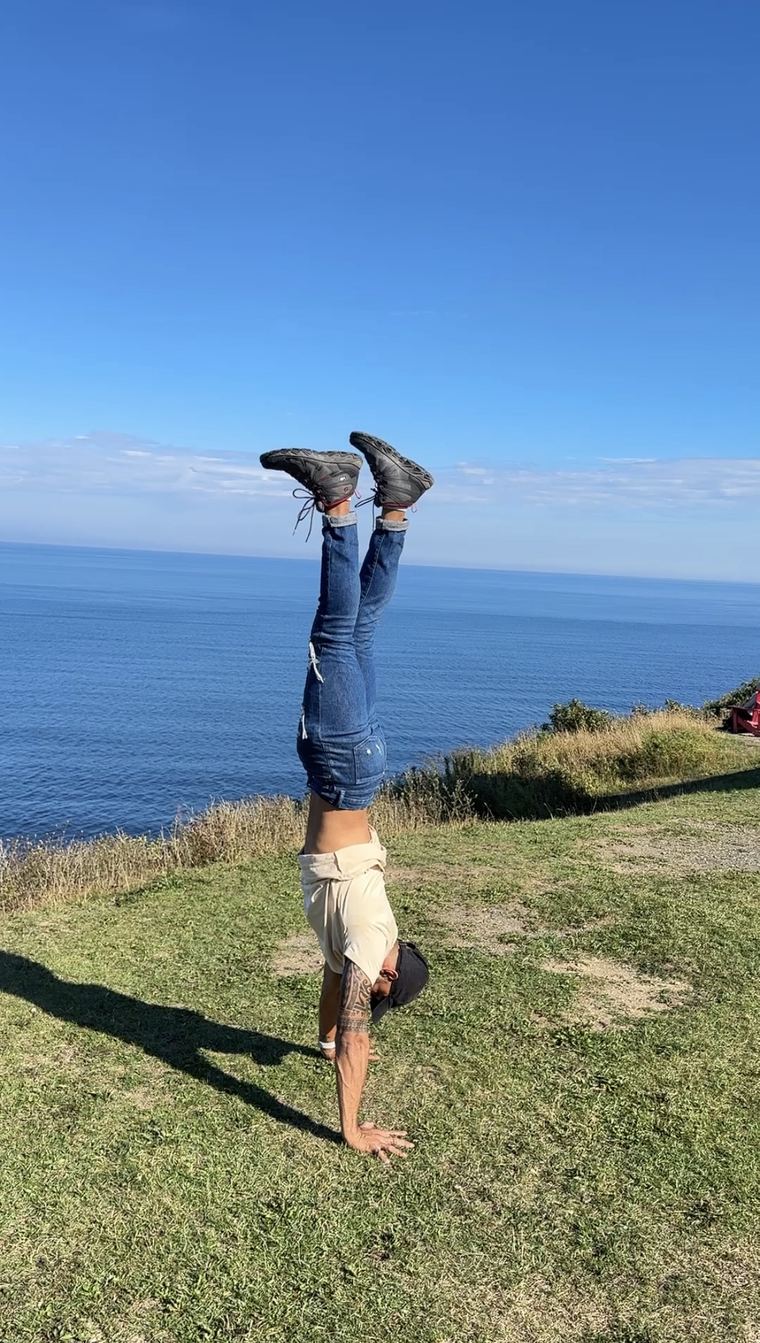
The rest of it happens upside down.

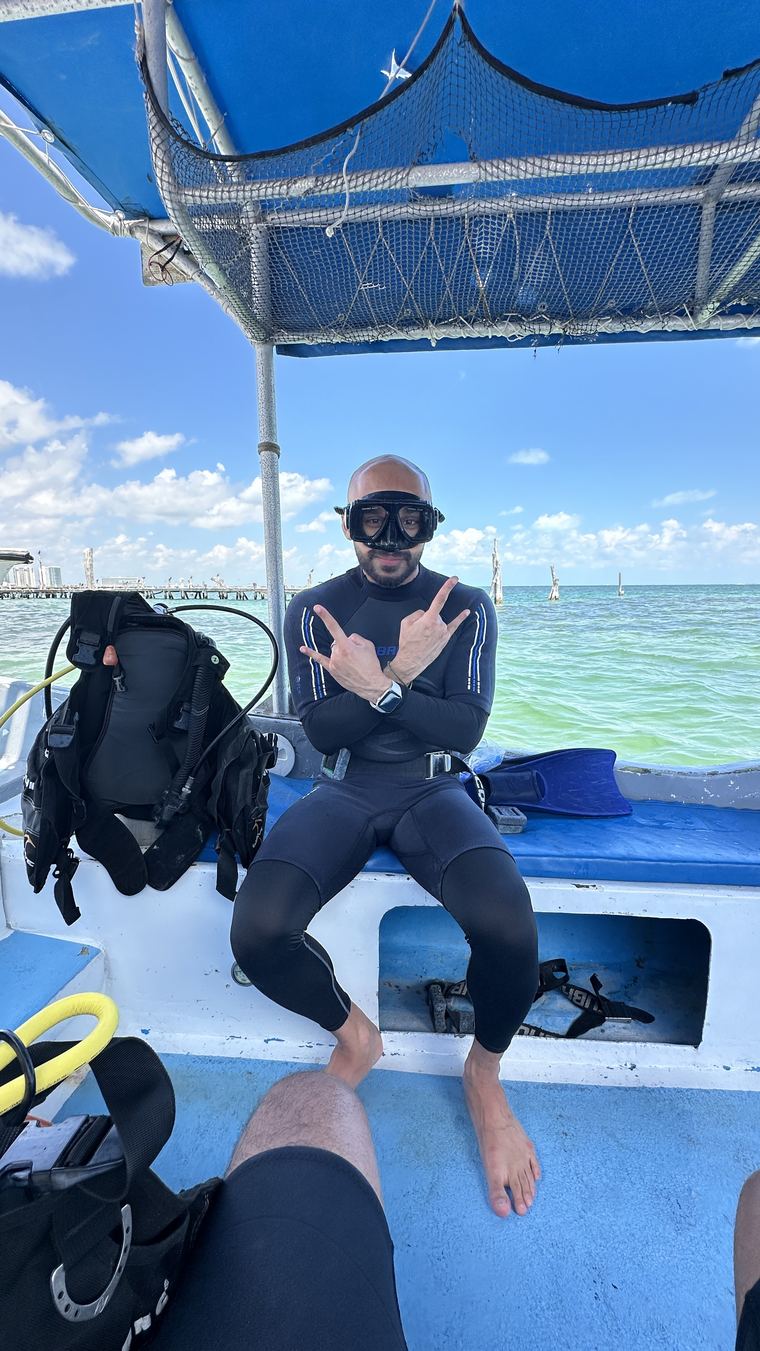
Handstands, distance running, diving and long walks uphill — in whatever country I happen to be standing in.

Blue, since long before it was reasonable

I support Chelsea. Religiously, and at some personal cost.

Football is the one part of my week that runs on faith instead of analysis. I've followed Chelsea long enough to have stopped expecting a model to help — which is most of the appeal. It's the only thing I care about where I actively don't want to know the answer in advance.

I play regularly as well, which is the better half of it. Watching is the faith part. Playing is the weekly reminder that getting ten people moving in the same direction is a completely different skill from being right about where they should go.

Everywhere else on this page I've argued that you should challenge the assumption and then check whether the decision created value. Saturday is the one place I refuse to do that.

09 — Contact

What's the next problem worth solving?

And if you have an idea rather than a role — I'm open to partnering. I like being early on things, I'll tell you honestly whether the numbers work before either of us is committed, and I'd much rather help build a good idea than watch it stall. Bring me the messy version.

Résumé — PDF

Before you take a copy, who’s asking?

Only so I know who I’m talking to if we speak later. Two fields, then the download opens.

Open the résumé

Used to know who got in touch, nothing else. Not shared, not added to a mailing list.